
Kinh nghiệm làm bài thi nghe B1 Goethe — 4 phần chi tiết
Cấu trúc bài thi nghe Goethe B1: 4 phần, số lần nghe, dạng câu hỏi và mẹo làm bài từng phần — đọc kỹ đề, từ phủ định, nhận diện giọng nói. Kèm gợi ý luyện nghe với đề thi có file nghe.

Phần thi nghe B1 Goethe gồm những gì?
Trong kỳ thi Goethe-Zertifikat B1, phần thi nghe thường là một trong những kỹ năng khiến nhiều bạn lo lắng nhất — có lúc nghe được khá nhiều, có lúc lại cảm giác “đơ người” sau vài câu đầu. Điều đó phụ thuộc không chỉ vốn từ vựng mà cả khả năng tập trung liên tục trong suốt bài thi.
Bài thi nghe B1 Goethe chia thành 4 phần (Teil 1–4), mỗi phần có số lần nghe, dạng câu hỏi và chủ đề khác nhau. Nắm rõ cấu trúc trước khi vào phòng thi giúp bạn phân bổ năng lượng đúng chỗ.
Bài này mình tổng hợp kinh nghiệm thi thật và cách luyện ở nhà. Nếu bạn cần bám sát format thi, hãy kết hợp với chiến lược tổng quan 4 kỹ năng B1 và tài liệu luyện thi B1 có đáp án kèm file nghe.
Teil 1 — 10 câu, 5 đoạn nghe (mỗi đoạn 2 lần)
Phần đầu có 10 câu hỏi cho 5 đoạn nghe — mỗi đoạn bạn được nghe 2 lần, tương ứng 2 câu hỏi cho mỗi đoạn. Một câu thường là dạng Richtig/Falsch (đúng hoặc sai), câu còn lại là trắc nghiệm A, B hoặc C.
Chủ đề Teil 1 đa số xoay quanh cuộc sống đời thường: dời lịch hẹn, tàu đến trễ, hẹn gặp bạn, thông báo ở chỗ làm… Nghe có vẻ quen thuộc, nhưng điểm mình thấy nhiều bạn mất nhất ở đây không phải vì nghe không hiểu — mà vì không đọc kỹ câu hỏi và dính bẫy paraphrase.
Cách làm Teil 1: đọc thật kỹ câu hỏi trước khi audio phát. Lần nghe thứ nhất: nắm tổng quan ý chính và ghi chú nhanh từ khóa. Lần nghe thứ hai: xác nhận lại đáp án, đặc biệt với câu Richtig/Falsch — đôi khi chỉ một chi tiết nhỏ (nicht, kein, erst…) là đủ làm cả câu đảo nghĩa.
Teil 2 — 5 câu, một đoạn dài (chỉ nghe 1 lần)
Teil 2 có 5 câu hỏi cho một đoạn nghe duy nhất, dạng trắc nghiệm A, B hoặc C. Bạn chỉ được nghe một lần — không có cơ hội nghe lại.
Chủ đề Teil 2 đa dạng hơn nhiều: văn hóa, lịch sử, đời sống, xã hội… Phần này đòi hỏi vốn từ vựng tương đối rộng để hiểu được nội dung, kể cả khi giọng đọc rõ. Đây là một trong những phần khó nhất của bài thi nghe B1 — nhiều bạn nghe được ý chính nhưng không kịp chọn đáp án vì chưa quen tốc độ và độ dài bài.
Mẹo thi: trong thời gian đọc đề, gạch chân từ khóa trong từng câu hỏi (ai, làm gì, khi nào, vì sao). Khi nghe, đừng cố hiểu từng từ lạ — bám theo câu hỏi để “bắt” thông tin. Luyện ở nhà nên dùng đề thi thật có file nghe và đáp án để quen áp lực chỉ nghe một lần — xem tài liệu luyện thi B1.
Teil 3 — 8 câu Richtig/Falsch (nghe 1 lần)
Teil 3 gồm 8 câu hỏi cho một đoạn nghe, toàn bộ dạng đúng hoặc sai. Bạn cũng chỉ nghe một lần. Chủ đề thường liên quan công việc, học tập, đời sống — ví dụ hai người bạn bàn về bữa tiệc sinh nhật sắp tới, hoặc thảo luận kế hoạch cuối tuần.
Điểm mình hay nhắc với Teil 3: đọc kỹ cả phần giới thiệu tình huống phía trên (đoạn mô tả ngữ cảnh trước câu hỏi), không chỉ đọc lướt từng câu Richtig/Falsch. Bối cảnh giúp bạn biết ai đang nói, họ bàn về việc gì — rất hữu ích khi audio nói nhanh.
Chú ý đặc biệt các từ mang nghĩa phủ định (nicht, kein, nie, kaum, wenig…) vì chúng có thể đảo toàn bộ nghĩa câu. Teil 3 không khó bằng Teil 2 về từ vựng, nhưng dễ mất điểm vì bất cẩn — đáp án đúng nhưng bạn tick nhầm chiều Richtig/Falsch.
Teil 4 — 8 câu, bài phỏng vấn 3 người (nghe 2 lần)
Teil 4 có 8 câu hỏi cho một bài nghe dạng phỏng vấn — thường có 3 người nói. Nhiệm vụ của bạn: nhận diện ai nói câu nào (giọng nào khớp với phát biểu nào). Bạn được nghe 2 lần.
Nếu bạn có khả năng phân biệt giọng tốt, Teil 4 là phần có thể giành trọn điểm mà không quá vất vả. Ngược lại, nhiều bạn mất điểm ở đây vì chưa quen nghe nhiều giọng xen kẽ trong một bài.
Tip áp dụng ngay khi thi: mỗi người nói với giọng khác nhau — hãy chú ý âm sắc, ngữ điệu, cao trầm (giọng trầm ấm, giọng cao tươi, giọng nghe “già dặn” hay trẻ trung…). Lần nghe 1: gán nhãn tạm cho từng giọng (A/B/C). Lần nghe 2: khớp câu hỏi với giọng đã nhận diện. Teil 4 còn dùng paraphrase khá nhiều — học thêm từ đồng nghĩa sẽ giúp bạn bắt được ý dù cách diễn đạt trong câu hỏi khác với audio.
Luyện thi nghe ở nhà — và tài liệu có file nghe
Phần nghe khó đoán trước: hôm nay tai “bắt” được 80%, ngày mai có thể chỉ 50% nếu bạn mệt hoặc mất tập trung. Vì vậy luyện đều quan trọng hơn luyện dồn trước ngày thi.
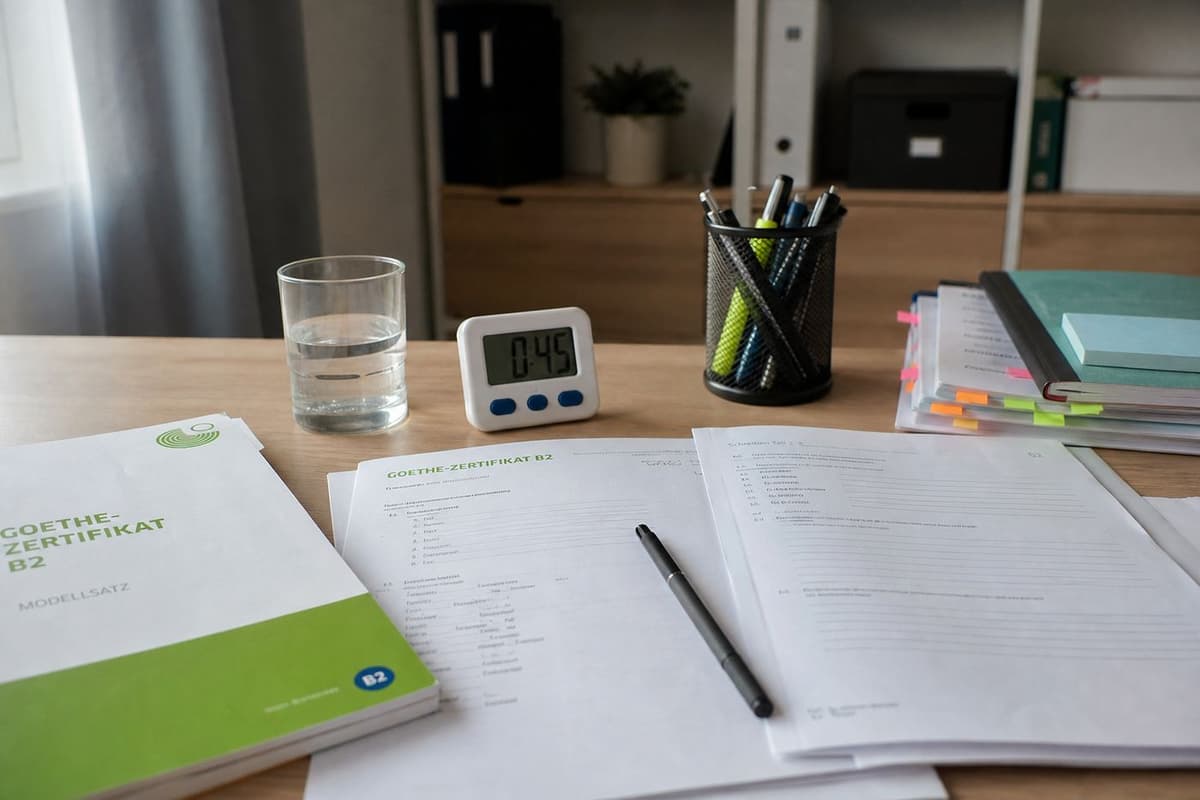
Ở nhà, hãy làm bài nghe nghiêm túc như thi thật: không tua, không nghe lại khi đề chỉ cho một lần, ngồi không gian yên tĩnh, không ai quấy rầy. Dần dần bạn sẽ quen áp lực thời gian và bớt hoảng khi vào phòng thi.


Bình luận (0)
Đăng nhập để tham gia thảo luận.
Chưa có bình luận. Hãy là người đầu tiên chia sẻ suy nghĩ của bạn.