
Mẹo ghi nhớ giống của danh từ tiếng Đức
Nhớ der, die, das không cần học thuộc từng từ — có quy tắc ngầm và nhóm từ vựng giúp bạn đoán chính xác đến 80%. Tổng hợp theo ý nghĩa, đuôi từ và mẹo học kèm mạo từ.
Vì sao từ vựng tiếng Đức khó nhớ?
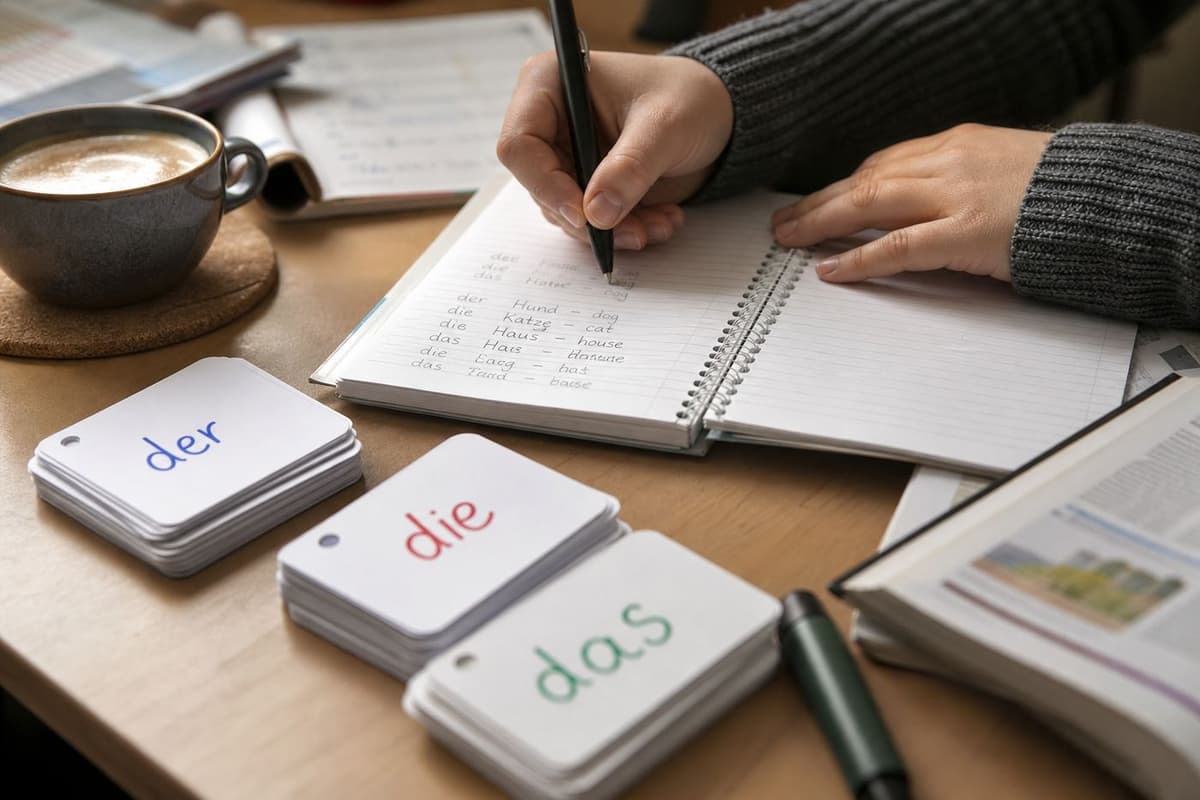
Một trong những thử thách lớn nhất khi học tiếng Đức là phải nhớ giống (der, die, das) của mỗi danh từ. Thay vì học từ trần trụi, hãy luôn học kèm mạo từ và màu sắc gợi nhớ.
Phương pháp ghi nhớ bền vững
Phương pháp gắn màu: gán màu xanh cho der, đỏ cho die, xanh lá cho das. Khi viết flashcard, tô màu tương ứng để não bộ tạo liên kết hình ảnh.
Học theo cụm và ngữ cảnh thay vì từ đơn lẻ. Ví dụ, thay vì nhớ "Termin" (cuộc hẹn), hãy nhớ cả cụm "einen Termin vereinbaren" (đặt một cuộc hẹn).
Sử dụng kỹ thuật lặp lại ngắt quãng (spaced repetition) với các ứng dụng flashcard. Ôn lại từ vào đúng thời điểm sắp quên sẽ giúp ghi nhớ dài hạn hiệu quả nhất.
Cuối cùng, hãy dùng từ mới ngay trong câu của riêng bạn. Việc chủ động sản sinh ngôn ngữ giúp từ vựng đi vào trí nhớ chủ động nhanh hơn nhiều so với chỉ đọc lại.
Quy tắc ngầm khi sử dụng giống của danh từ
Có những quy tắc ngầm và nhóm từ vựng giúp bạn đoán chính xác đến 80%.
Dưới đây là tổng hợp các nhóm danh từ phổ biến theo giống, đi kèm với mẹo nhận biết qua ý nghĩa và đuôi từ (suffixes).
1. Giống Đực (der)
Thường chỉ nam giới, các yếu tố thời gian, thời tiết và các từ có đuôi đặc trưng.
Con người/Nghề nghiệp (nam giới): der Vater (bố), der Arzt (nam bác sĩ).
Thứ, tháng, mùa: der Montag (thứ Hai), der Januar (tháng Một), der Sommer (mùa hè).
Thời tiết, thiên tai: der Regen (mưa), der Schnee (tuyết), der Wind (gió). Ngoại lệ: die Sonne (mặt trời), das Wetter (thời tiết).
Thức uống có cồn: der Wein (rượu vang), der Sekt (vang nổ), der Vodka. Ngoại lệ lớn nhất: das Bier (bia).
Theo đuôi từ (suffixes) — Các từ kết thúc bằng: -ling, -or, -ismus, -ner, -ig. Ví dụ: der Schmetterling (con bướm), der Motor (động cơ), der Optimismus (lạc quan), der Honig (mật ong).
2. Giống Cái (die)
Nhiều loại rau củ quả thuộc giống die. Giống cái chiếm số lượng từ vựng rất lớn trong tiếng Đức.
Con người/Nghề nghiệp (nữ giới): die Mutter (mẹ), die Ärztin (nữ bác sĩ).
Trái cây và hoa quả: die Banane (chuối), die Tomate (cà chua), die Kartoffel (khoai tây), die Rose (hoa hồng). Ngoại lệ: der Apfel (táo), der Pfirsich (đào).
Tên các con sông ở Đức/Châu Âu: die Donau (sông Danube), die Elbe. Ngoại lệ: der Rhein, der Main.
Hầu hết các từ kết thúc bằng chữ "-e": die Lampe (đèn), die Tasche (túi xách), die Reise (chuyến đi).
Theo đuôi từ (suffixes) — chính xác 100%: các từ kết thúc bằng -ung, -heit, -keit, -schaft, -tion, -ität, -ik. Ví dụ: die Zeitung (báo), die Freiheit (tự do), die Freundschaft (tình bạn), die Station (nhà ga/trạm), die Musik (âm nhạc).
3. Giống Trung (das)
Thường là danh từ chỉ vật thể nhỏ, từ mượn tiếng Anh, hoặc các khái niệm trừu tượng, hoạt động.
Màu sắc: das Blau (màu xanh), das Rot (màu đỏ).
Kim loại và nguyên tố: das Gold (vàng), das Silber (bạc), das Eisen (sắt). Ngoại lệ: die Bronze.
Từ mượn tiếng Anh (kết thúc bằng -ing): das Training (tập luyện), das Shopping (mua sắm).
Danh động từ (động từ biến thành danh từ): das Essen (đồ ăn/việc ăn), das Trinken (đồ uống), das Leben (cuộc sống).
Con non (người và động vật): das Baby (đứa trẻ), das Kind (đứa con), das Lamm (cừu non).
Theo đuôi từ (suffixes) — Từ thu nhỏ (diminutives) kết thúc bằng -chen, -lein: luôn luôn là das (bất kể giới tính gốc). Ví dụ: das Mädchen (cô bé — dù là con gái nhưng mang giống das), das Brötchen (bánh mì nhỏ).
Theo đuôi từ (suffixes) — Các đuôi khác: -tum, -ment. Ví dụ: das Eigentum (tài sản), das Dokument (tài liệu).
Bảng tóm tắt nhanh
der — Nam giới, thời gian, thời tiết, rượu. Đuôi từ đặc trưng: -ling, -or, -ismus, -ig.
die — Nữ giới, rau củ quả, số nhiều. Đuôi từ đặc trưng: -ung, -heit, -keit, -schaft, -tion, -e.
das — Màu sắc, kim loại, danh động từ, từ mượn. Đuôi từ đặc trưng: -chen, -lein, -ment, -tum.
Mẹo nhỏ: Khi học một từ vựng mới, bạn đừng học từ riêng lẻ (như Auto), hãy học kèm quán từ của nó luôn thành một cụm từ liền mạch (das Auto). Não bộ sẽ ghi nhớ âm điệu của cả cụm dễ dàng hơn!



Bình luận (0)
Đăng nhập để tham gia thảo luận.
Chưa có bình luận. Hãy là người đầu tiên chia sẻ suy nghĩ của bạn.